

Bathroom Tile Buying Guide
This bathroom tile buying guide has been compiled by Tiles Direct, to help you choose the right tile materials and styles for your home. Read more today.
This bathroom tile buying guide has been put together by the experts here at Tiles Direct, covering everything you need to know about bathroom tiles. Within the following sections, we will offer comprehensive advice on tile materials, popular styles, colour schemes, etc, as well as clarifying the fundamental differences between wall and floor tiles.
As leading industry experts, we understand the importance of getting the right tiles to suit your bathroom; which is an ethos which we believe is reflected in our wide selection of bathroom tiles. After all, your bathroom might be the smallest room in your home, but that doesn’t make it any less significant. So whether you’ve just moved house, or whether you’re simply looking to revamp your current bathroom interior, this tile guide is here to help you.
Contents
- The difference between wall & floor tiles
- Types of tile materials
- Marble tiles
- Granite tiles
- Slate tiles
- Porcelain tiles
- Quarry tiles
- Travertine tiles
- Ceramic tiles
- Natural Stone tiles
- Popular bathroom tile styles
- Stardust tiles
- Mirrored tiles
- Mosaic tiles
- Moroccan-inspired tiles
- Metro Brick tiles
- Lounge tiles
- Bathroom colour schemes
- Perfect pastels
- Wonderfully white
- Bold and bright
The difference between wall & floor tiles
Wall and floor tiles cause confusion for a lot of people when they come to update their bathroom; this is largely because the difference between the two isn’t always made clear. We often get asked whether the only difference is their size; and while it is true that most floor tiles are larger than wall tiles, there are other distinguishing factors that must be understood.
For example, you might be surprised to learn that you can install floor tiles on a wall, but the same does not apply the opposite way round. This is because, in order to determine what can be classified as a bathroom floor tile, its suitability must be established on two scales. Firstly, the PEI (Porcelain Enamel Institute) rating of the tile must be at least III (on their scale of I to V), which indicates that a tile is durable enough to withstand residential and light commercial foot traffic. In other words, the tile has to be strong enough to support people’s weight on a regular basis.
Secondly, the slip resistance and overall strength of a tile should be taken into consideration. This is measured by something called the Static Coefficient of Friction (SCOF), which your tile manufacturer will be aware of and can inform you on if you have a question for them.
There is no good in laying bathroom floor tiles that are highly durable if they also present a serious slipping hazard.
It is therefore important to be aware of these ratings, because not all bathroom tile manufacturers simply label their products as either ‘floor tiles’ or ‘wall tiles.’ So even if a tile is large, you should still check whether it is suitable for foot traffic. In a nutshell, floor tiles are only ever classified as such if they meet the specific criteria set out within the PEI scale.
So, the main differences between wall and floor tiles are their durability, strength, and slip resistance. All of which means that you can put a floor tile on a wall to make it more durable, but you cannot lay a wall tile on the floor.
Types of tile materials
Tiles are hardwearing, practical, and extremely versatile, which makes them the perfect choice for bathrooms. However, with so many materials on the market, it is important to choose the right one for the job. Not only will your tiles set the tone for the whole room, but they will also determine how easy the room will be to clean and maintain. This section therefore looks at the most commonly used bathroom tile materials, along with their defining characteristics.
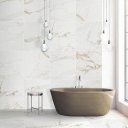
Marble is a soft natural stone, and is considered relatively fragile when loose. For this reason, marble tiles are required to be sealed before and after fixing, and should then be polished with a gloss finish. Once fitted, however, the marble becomes extremely sturdy, and provides bathrooms with a luxurious and elegant finish.
Essentially, marble is a recrystallized, metamorphic form of limestone. This transformation occurs when limestone is exposed to heat and pressure in the Earth’s crust, softening it, and exposing it to mineral changes. As a result of this pressurised reaction, marble appears highly veined and grainy, and it is available in a spectrum of colours.
As marble is a natural product, no two tiles are exactly the same; this creates a truly authentic effect that other materials cannot emulate. It is also important to note that because marble is highly polished, it should be used with caution in bathrooms that are used by children.
Granite tiles are extremely hardwearing and easier to maintain than marble or travertine tiles. Once grouted and sealed, they will not fade and are able to withstand a large amount of foot traffic. Usually dark in colour, granite is composed of feldspar, quartz, and potassium, which gives the tiles their granular appearance.
While granite is highly durable, it is also important to be aware that it has porous properties, making it prone to stains. Your tiles should therefore be sealed from time to time, in order to keep them in optimum condition. Granite is available in a range of different finishes, though most people opt for the polished look.
Slate tiles
Slate tiles are usually grey, black, or green, and feature characteristic red tones throughout. They are also extremely hardwearing, which makes them perfect for bathroom use (either as wall or floor tiles). Like all natural stone tiles, slate will require sealing after installation. This provides the tiles with a crisper appearance and preserves them against daily use.
Slate is formed from a combination of clay, sedimentary rock and, occasionally, quartz. The cost of a slate bathroom tile will vary depending on where it originated from. The most desirable type of slate is underground slate; largely because it hasn’t been exposed to the elements for decades like ground level slate has. However, underground slate is usually more expensive, as it costs more to mine and extract.
Porcelain tiles (commonly referred to as vitrified tiles) are the most durable of all ceramic tile products. Porcelain is able to be pressed at extremely high pressures as it is made from refined China clay, which serves to make it highly stain and impact resistant.
Porcelain is approximately 30 per cent more durable than natural stone, and it is extremely easy to maintain. Unlike slate and granite, you do not need to seal or polish glazed porcelain, which makes it an extremely practical tile choice. Overall, porcelain is more expensive than ceramic; however, it offers a natural stone finish that is extremely durable — which is often worth the added expenditure.
Quarry tiles
Quarry tiles are produced from natural clay, which gives them their characteristic terracotta colour. These tiles are perfect for use throughout your home, and even outdoors, due to their anti-slip properties, and that they are extremely hardwearing.
Travertine tiles
Travertine is quickly becoming one of the most popular choices of natural stone tiles. The warm, earthy tones add a tranquil quality to homes, meanwhile the uniqueness of every tile brings character to the chosen space.
Travertine belongs to the limestone family and it is characterised by spaces in the surface of the stone. These voids occur as a result of calcite water percolating through rocks and filling cavities near waterfalls, after which particles are carried
Travertine is quickly becoming one of the most popular choices of natural stone tiles. The warm, earthy tones add a tranquil quality to homes, meanwhile the uniqueness of every tile brings character to the chosen space.
Travertine belongs to the limestone family and it is characterised by spaces in the surface of the stone. These voids occur as a result of calcite water percolating through rocks and filling cavities near waterfalls, after which particles are carried up through the spray and travertine is formed from the deposits.
Travertine tiles can be left unfilled (tumbled), or the natural gaps can be filled with matching resin. Because of these voids, travertine tiles are only suitable for low-foot traffic areas, and they also require regular sealing.
Ceramic tiles stylish and are can usually be purchased in a vast range of colours. They are also easy to maintain and clean to a highly sleek finish, making them a popular choice for bathrooms.
Ceramic is manufactured from quarried clay material which is prepared and formed into a mold. The tiles can then be formed by dry press, slush mold, or extruded. Each forming method produces ceramic tiles that are extremely durable for both walls and floors.
Natural stone tiles are exactly what they sound like; they are tiles that have been produced from natural, raw materials that are then finished and cut to size. The characteristics of any given natural stone tile depends on when and where the material was sourced. Typically, however, they are widely available in three types of finishes: honed, polished, or natural.
Popular bathroom tile styles
While some people prioritise the material of a tile over anything else, others prefer to look at the style of a tile as the deciding factor. Whatever kind of atmosphere you want to create with your bathroom, your tiles will determine how effective the overall space will be.
For example, if you have a fairly small bathroom, you may wish to make your space seem larger with mirrored tiles. Alternatively, if you’re trying to achieve a glamourous ambiance, stardust tiles could be a good option.
In this section we will take a closer look at some of the most popular bathroom tile styles, and discuss the benefits of each.
Stardust tiles
Stardust bathroom tiles are characterised by their stunning iridescence; a quality which is afforded by the many granules of high grade quartz silica embedded within the tile. This quartz-based compressed stone is then blended with an engineered polyester agent which acts as a bonding agent.
This compound mix produces a stunning, durable material that meets the exacting demands of big interior projects. So if you’re looking to create a sophisticated and striking bathroom, it is worth considering stardust tiles.
Mirrored tiles
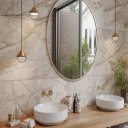
Mirrored tiles are great if you want to create the illusion of space in modest-sized bathrooms. They also help to make the most of available lighting throughout your space. Furthermore, as mirrored tiles are available in glass and acrylic form, you can choose a price and size that suits your project.
Mosaic tiles
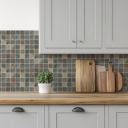
Mosaics can be used to tile bathroom floors, walls, and even ceilings. They are available in a range of sizes, which makes them ideal for creating a stylish and individual look in your home. What’s more, they can be made from porcelain or marble, so you can always find something to suit your taste.
Mosaic tiles are attached to a backing sheet which allows them to be easily fixed to your surface. Depending on the nature and complexity of your design, the tiles are put together either by machine or by hand. The latter, however, is usually more expensive.
Moroccan-inspired tiles
Moroccan-inspired tiles are largely characterised by detailed patterns and bright colours. These parallel the vibrancy of the country’s culture and the diversity of its people. While traditional Moroccan-inspired bathrooms don’t usually deviate from core aesthetics, modern interior design has the freedom to be much more creative.
Moroccan tile suggestion: use smaller tiles to create a centrepiece mosaic in your bathroom; blending bold tones and patterns with more subtle tones for a thoroughly authentic Moroccan effect.
Metro brick tiles
Metro brick tiles are great for adding an urban and contemporary touch to your bathroom. They are widely available in bevelled and flat styles, as well as a range of colours. The ceramic material is highly durable and easy to maintain, making them perfect for bathroom walls.
Lounge tiles
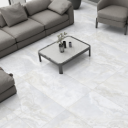
Lounge tiles are made from porcelain and are typically rectangular or square in shape. Their minimalist beauty adds a touch of elegance to your bathroom, while also being practical and easy to clean. What’s more, lounge tiles can be used in other areas of your home, such as the kitchen and living area, which allows you to fuse your bathroom’s décor with the rest of your interior space.
Bathroom colour schemes
When it comes to selecting your bathroom colour scheme, it’s all about personal taste. However, special considerations must be made depending on the mood you want to create and the size constraints of your bathroom.
Different colours have the ability to transform a room enormously, so you should ask yourself whether you want a colour scheme that will stimulate your senses during your morning routine, or whether you want something a little more relaxing to help you unwind at the end of the day. This section will therefore look more closely at some of the most effective bathroom colour schemes.
Perfect pastels
In general, pastel tiles encompass a wide spectrum of colours, which can make it difficult to decide on a specific theme. It can therefore be helpful to take inspiration from the rooms and hallways throughout your home, creating a coherent, overarching theme. Pastel tones are so popular because they make a great tranquil bathroom environment, with their warm hues creating a cosy ambience that can be enjoyed all year round.
Wonderfully white
White is a popular bathroom colour scheme as it lends itself well to both traditional and contemporary interiors. Its fresh, pristine appearance also acts as a good framework for mixing other colours into; creating a subtle fusion of calming tones. Soft yellows are particularly effective when blended against a white canvas, while serene green accessories also work well.
If you do choose to introduce other subtle colours to your white bathroom, it is important that your central theme doesn’t become overwhelmed. Strike the balance by making use of large wall mirrors to brilliantly reflect the lustre of your white tiles.
Bold and bright
Morning routines centre around the bathroom, so it makes sense to decorate your space as a vibrantly as possible. Make your space a refreshing hub of activity by adding a pop of colour. Citrus tones are great for awakening the senses early in the morning, as well as elevating the overall brightness of the room.
Has this tile buying guide been helpful?
This guide has been put together by the experts at Tiles Direct, to help you choose the perfect tiles for your bathroom. As industry leaders, we understand that refurbishing any aspect of your home can be daunting, which is why we’ve gone to great lengths to make this tile resource as informative as possible.
If, however, you would like any more information please do not hesitate to get in touch. Alternatively, you can view the huge range of bathroom tiles available here at Tiles Direct.
So, whether you were looking for information on tile materials, styles, or the difference between wall and floor tiles, we hope you found the answers to your questions here.

Comments are closed here.