




The Garden Edit: 7 Stylish Ways to Design a Functional Split Level Garden
Gardens come in all shapes and sizes – and if you’re faced with designing a sloping garden, it can be more of a challenge than working with flat ground.
However, multi-level gardens don’t have to be a headache. With a design that makes use of split levels, sloping gardens can utilise the space more effectively – creating defined zones and adding interest.
In this Garden Edit article, we’re going to be shining the spotlight on tiered gardens, with ideas and tips on how to work with a steep landscape and create an enviable outdoor space regardless of the gradient.
Make a statement with steps and raised beds
Cutting steps into steep slopes is a practical way to make the space easier to negotiate from top to bottom and vice versa.
However, they can also become a style statement in their own right by combining them with raised flower beds on either side.
Mirroring the descent of the steps with flowers and shrubbery adds wonderful symmetry to your design and beautifully frames the steps as a focal point.
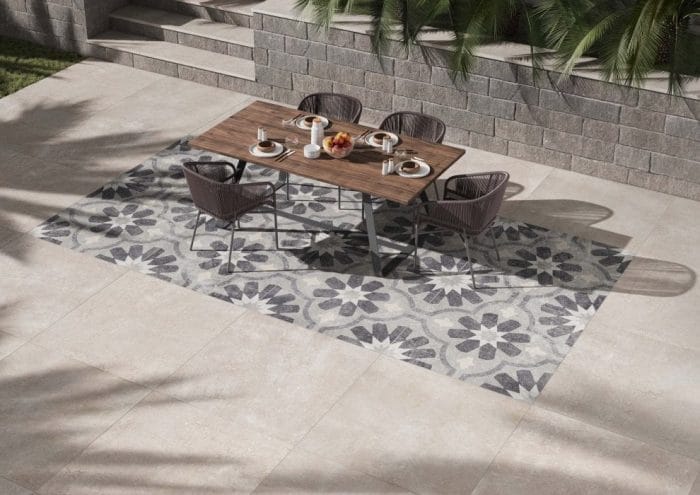
In terms of design, you have the option to go rustic with red bricks or stones, or keep things modern with sleek outdoor tiles for hardscaping materials. For planting, mix up different species, colours and heights to create a striking display.
Fill level gaps with flowers
Installing a raised decking area or terrace for entertaining is an effective way to connect your home to the garden and create a usable space.
For some designs, though, this can result in an empty void below the deck and the rest of the garden. This obviously can be filled in if you wish, or you can save yourself the effort by introducing a deep flowerbed in front of the gap.
When choosing plants, place taller ones at the back to provide the most coverage and pick ones that will grow high enough to conceal the gap without obstructing the decking.
The addition of the deep flower bed will keep the dead space covered and create the illusion that everything is on an even level.
Use a path on sloping lawns
Sloping garden ideas don’t just apply to steep inclines. There are plenty of gentle slopes, such as a lawn that runs down to one side, which can also be a pain to landscape.
But we have a nifty trick for gently sloping gardens – cutting a path across them or, for large lawns, snaking a gradual walkway downwards.
For one, this creates a level walkway that makes the sloped landscape easier to navigate across. Secondly, a path can create an interesting feature that breaks up the mass of grass. It also reduces the visual impact of the slope, bringing better balance to your garden design.
For a minimalist design, let the paths serve as the key focal point – or soften their impact with flower beds on either side, filled with your favourite blooms.
Carve out zones with flat terraces
One of the benefits (yes, benefits) of sloped gardens is that they offer the perfect opportunity to create designated zones using split levels.
We’re not going to lie – creating these tiered levels and implementing your design ideas isn’t for the fainthearted. But the rewards will be worth it when you have a split level garden that naturally facilitates functionality.
Steep tiered garden ideas look to cut away the earth and build retaining walls that will support a level structure above. One level could be a paved terrace for al fresco dining, while another area could serve as a lawn for kids or even a water feature.
There really are endless possibilities for creating defined zones with multi-level garden ideas, but always seek professional advice from qualified tradespeople to ensure your platforms are structurally sound.
Introduce raised paths
Adding multiple levels to your sloped garden is one way to handle pesky inclines and transform your garden into a usable space. However, paving full terraces on every level can be an expensive and labour-intensive undertaking.
There are other options, though, which include adding raised paths.
Using wooden planks, you can create straight paths across the sloping area. This is something you can do yourself with a little DIY know-how, allowing you to tackle the hassle of uneven ground without laying a full terrace. Either side of your paths, plant flowers and bushes to mask the uneven ground and beautify the space.
It’s important to make sure your path incline isn’t too steep and the drop either side isn’t too big. If it is, you may need to add in a railing and steps to maximise safety – after all, the last thing you want is your hard work marred by a nasty trip.
Go rustic with organic hardscaping
If you like a more relaxed vibe in your garden, choosing organic materials like wood and stone can go a long way towards evoking a rustic finish. Both of these materials are also solid options for hardscaping steep tiered gardens thanks to their natural strength and durability.
One option for split level gardens is the idea of using chunky wooden railway sleepers or beams vertically to create a robust, earth-retaining wall for raised flower beds. Edges can be straight for a more uniform look, or you can soften them with curved borders.
Alternatively, channel a rugged vibe using large stones to build raised barriers. Keep it informal with a scattered rockery formation in low-level areas. Be warned, though – any retaining walls will need to be built like a solid wall.
Whichever design you choose, finish with a medley of hardy, low-maintenance plants, and you’ll have a textural paradise that’s brimming with rural charm.
Create a split-level water feature
A key feature of Japanese garden design, water can lend a zen feel to any garden with the soothing sounds of flowing water. On top of that, the natural topography of sloping gardens makes them ripe for adding a water feature.
When it comes to styles, you can go as big as your budget and space allows. For small tiered gardens, ideas will inevitably err on the modest side, but a compact waterfall can still have a meaningful impact on the overall design.
In larger gardens, tiered ponds can add emphasis to the natural incline, taking you on a tranquil journey through the multiple levels of your garden.
From sleek terraces finished with outdoor tiles to charming rockeries, we hope we’ve put your mind at rest – showing you that sloping gardens don’t have to be a headache.
With ample planning and some creative design ideas, multi-level gardens can be stylish, functional and beautiful.
Keep reading our interior design blog for even more home and garden design inspiration, how tos and tips. And if you need a durable hardscaping option for terraces and pathways in your sloped garden, our huge outdoor tiles collection has options galore.

Comments are closed here.