



“How Many Tiles Do I Need?” [Your Guide to Measuring For Tiles]

One of the main questions that’s always asked during a renovation project is ‘how many tiles do I need?’. When you break it down, it’s not as difficult to calculate yourself as you may think – you’ll be amazed at what a little patience, a calculator and a tape measure can do!
Walls and floors can be treated the same when measuring for tiles, but if you’re unsure of how to work out square metres or how to measure for wall and floor tiles, fear not – the below guide has all the answers!
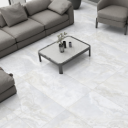
How to measure for floor tiles
If you have a nice and simple square or rectangular room, then calculating your floor area is pretty straightforward. Start by measuring the width and length of your space, using centimetres or millimetres (as most tile dimensions are given in square metres).
In this example, our rectangular room measures up at 300cm in width and 200cm in length.
Your first calculation is easy – simply multiply these numbers together and you’ll reach your overall area.
300cm x 200cm = 60,000㎠
As this calculation will give you the total in ㎠, you’ll need to convert to square metres. To do this, simply divide your total by 10,000. This is because one square metre is equivalent to 100cm x 100cm.
60,000cm / 10,000cm = 6.0㎡
We always recommend purchasing an extra 10% to accommodate for broken tiles and cuts needed for the room. The most efficient way to do this is by multiplying your ㎡ by 1.1.
6.0m x 1.1m = 6.6㎡
This figure will be the overall amount of tiles you need in square metres. Measuring for floor tiles is as simple as that.
Complex room shapes and sizes
Of course, when measuring for tiles, complex room shapes and sizes call for more complex sums – and at this point, it’s not uncommon for people to phone in some professional help. With a little extra patience and a calm attitude, however, these calculations can be just as easy as a normal room – saving you the effort of recruiting a tradesman.
First, sketch the room you’re working with. Break down your sketch into sectioned square and rectangular areas, labelling each as you go.
Now it’s simply a matter of going back to the basic way of working out your ㎡. Taking each rectangle/square and measuring individually, note down each measurement, remembering to divide this by 10,000 to get your ㎡.
Now, add all these figures together and you’ll have ㎡ for the tiles you need. Don’t forget to add that magic 10% extra for any breakages and cuttings!
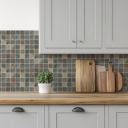
How to measure for wall tiles
Much like floors, walls are generally rectangular with the addition of doors and windows. Don’t worry if you have unusual wall shapes, you can still follow the process below when measuring for wall tiles.
First, you’ll need to calculate the size of the wall and subtract the measurements of any windows or doors.
In this example, our rectangular wall measures up at 50cm in width and 400cm in length.
Begin with measuring the length and height of the wall (remember, you only need to measure the part of the wall you’re tiling). You then multiply the two together.
400cm x 50cm = 20,000 ㎠
Don’t forget to covert to ㎡!
20,000cm / 10,000cm = 2.0㎡
Now, measure the height and width of any windows and doors.
In this example, our door measurement is 50cm x 80cm and our window measurement is 50cm x 50cm.
50cm x 80cm = 4,000㎠
50cm x 50cm= 2,500㎠
Again, you’ll need to convert this to ㎡.
4,000cm / 10,000cm = 0.4m㎡
2500cm / 10,000cm = 0.25㎡
From here, add the door and window measurements together.
0.4㎡ + 0.25㎡ = 0.65㎡
Take this value away from the original wall size and you’ll have the number of tiles needed for the area.
2.0㎡ – 0.65㎡ = 1.35㎡
And once more, don’t forget you’ll need to add 10% to allow for breakages and cuts.
Bish, bash, bosh – you now know how to measure tiles and find the right number of tiles you’ll need for that stunning wall renovation!
Of course, we realise that even with the above guide, you may still need a helping hand. That’s why all our product pages include a handy tile calculator that does all the legwork for you, meaning the only thing you need to worry about is the tiles themselves!
Now you know how to measure tiles, why not start browsing our selection of wall and floor tiles for inspiration for your DIY tiling project?

Comments are closed here.